

SUN HYDRAULICS
XRDCLNNAV
$321.70 USD
Tags:
- SUN HYDRAULICS
- Material:XRDCLNNAV
- Model:XRDC-LNN-AV
- Summary:Y-assembly
Quantity in stock: 0
***Disclaimer: The following summary contains information gathered from various sources such as product descriptions, technical specifications and catalogs. While efforts have been made to provide accurate details, inaccuracies may occur. It is advised to verify all information by contacting Sun Hydraulics directly.***
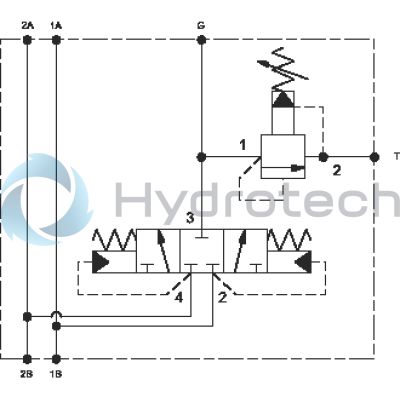
The Sun Hydraulics XRDCLNNAV (XRDCLNNAV) is a specialized valve assembly designed to provide an efficient flushing circuit for hydrostatic transmissions. This system facilitates the discharge of hot, dirty oil from the low-pressure side of the loop, which is then replaced by cool, filtered oil supplied by the charge pump. A key feature of this hot oil shuttle system is its ability to confirm or adjust the hot oil relief setting while the transmission is in neutral. The design includes two common ports marked as 1 and 2, allowing for easy integration into existing systems by teeing off rather than direct plumbing into the loop. The valve's operation involves controlling charge pressure through the charge pump relief when in neutral and redirecting some or all of this flow to the hot oil relief when activated. To ensure optimal performance, it is essential that the charge pump relief setting is higher than that of the hot oil relief, as this differential pressure dictates the rate of hot oil flow. The standard configuration sets the hot oil relief at 200 psi (14 bar) with a flow rate of 4 gpm (16 L/min). Given that hydraulic motors can leak, it is advisable to employ a mechanical brake to securely lock any stopped live load. With a capacity of 10 gpm (40 L/min), this line-mount body type valve requires four mounting holes for installation. It leverages Sun's expertise in utilizing 6061-T651 aluminum for its construction due to its exceptional corrosion resistance and mechanical properties. Additionally, anodizing processes are not applied to these manifolds due to concerns over increased breakaway torque and reduced fatigue life associated with anodized surfaces.
The Sun Hydraulics XRDCLNNAV (XRDCLNNAV) is a specialized valve assembly designed to provide an efficient flushing circuit for hydrostatic transmissions. This system facilitates the discharge of hot, dirty oil from the low-pressure side of the loop, which is then replaced by cool, filtered oil supplied by the charge pump. A key feature of this hot oil shuttle system is its ability to confirm or adjust the hot oil relief setting while the transmission is in neutral. The design includes two common ports marked as 1 and 2, allowing for easy integration into existing systems by teeing off rather than direct plumbing into the loop. The valve's operation involves controlling charge pressure through the charge pump relief when in neutral and redirecting some or all of this flow to the hot oil relief when activated. To ensure optimal performance, it is essential that the charge pump relief setting is higher than that of the hot oil relief, as this differential pressure dictates the rate of hot oil flow. The standard configuration sets the hot oil relief at 200 psi (14 bar) with a flow rate of 4 gpm (16 L/min). Given that hydraulic motors can leak, it is advisable to employ a mechanical brake to securely lock any stopped live load. With a capacity of 10 gpm (40 L/min), this line-mount body type valve requires four mounting holes for installation. It leverages Sun's expertise in utilizing 6061-T651 aluminum for its construction due to its exceptional corrosion resistance and mechanical properties. Additionally, anodizing processes are not applied to these manifolds due to concerns over increased breakaway torque and reduced fatigue life associated with anodized surfaces.
This valve assembly provides a flushing circuit for hydrostatic transmissions. The hot oil flushing circuit allows a discharge of oil from the low pressure side of the loop. The charge pump replaces the hot, dirty oil with cool, filtered oil. The hot oil discharge is often passed through the cases of the pump and the motor, flushing hot, dirty oil from them as well.
- A unique feature of the hot oil shuttle is that the setting of the hot oil relief can be confirmed or adjusted when the transmission is in neutral.
- The two ports marked 1 are common as are the two marked 2. Therefore the assembly can be teed off the loop rather than being plumbed into the loop.
- The two ports marked 1 are common as are the two marked 2. The high pressure relief that is physically on the same side as port 1 controls the pressure on port 2 and vice versa.
- When the transmission is in neutral the charge pressure is controlled by the charge pump relief. When the hot oil shuttle opens, some or all of the charge pump flow is redirected to the hot oil relief. The charge pump relief must be set higher than the hot oil relief to produce hot oil flow. The higher the differential pressure between the 2 reliefs, the higher the hot oil flow. The amount of hot oil flow is determined by the pressure vrs flow curves of the 2 reliefs and is difficult to quantify.
- The standard setting of the hot oil relief is 200 psi (14 bar) at a flow of 4 gpm (16 L/min).
- Hydraulic motors leak. Therefore a mechanical brake is recommended to positively lock any stopped live load.
| Capacity | 10 gpm40 L/min. |
| Body Type | Line mountLine mount |
| Mounting Hole Quantity | 44 |
Show FAQ
Additional Resources
- Protect Hydrostatic Transmission Circuits with Sun’s Delayed Shift Hot Oil Shuttle.
- Integrated Packages: Solutions That Grow Your Reputation
- Manufacturing Sun Cartridge Cavities
- Sun's Floating Style Screw-In Cartridge
- Sun Model Code Explanation; 999-901-334
- Custom Integrated Packages from Sun
- Fluid and Temperature Recommendations
Notes:
- Important: Carefully consider the maximum system pressure. The pressure rating of the manifold is dependent on the manifold material, with the port type/size a secondary consideration. Manifolds constructed of aluminum are not rated for pressures higher than 3000 psi (210 bar), regardless of the port type/size specified.